La Segua Rising
Poems of Flight and Folklore
As far as I understand, it has happened twice in Iceland. I am referring to two of the most outstanding artists in recent history—Björk and; the late composer; Jóhann Jóhannsson. However, there are many more Icelandic musicians and groundbreaking Icelandic film composers.
I have been researching the Icelandic landscape to accurately describe a situation for a poem about two flight attendants stranded overnight in Keflavik, where they develop an intimate friendship. Though fictional, I set this piece in 1975, which led me to explore Iceland's recent history through extensive reading.
This project has a bifurcated origin rooted first in the colonial myth of La Segua, a cautionary tale against racial mixing between Indigenous women and Spanish colonizers in the 16th century. Stories reveal a people's story—at six years old, my grandmother introduced me to this tale originating in Costa Rica as a bedtime story.
The poems themselves emerged during a 2013 month-long fundraiser for Tupelo Press called 30/30, where "poets run the equivalent of a 'poetry marathon,' writing 30 poems in 30 days." During the second half of this challenge, I began tinkering with my grandmother's tale of La Segua, a story about a cursed woman skulking into the night.
La Segua describes a woman who appears at night, her face obscured by darkness and long dark hair, her voice distressed. "Segua" derives from Nahuatl meaning "woman." Around the world, similar myths about vengeful women exist—Medusa with her deadly gaze or the alluring Sirens of The Odyssey. These tales exemplify what Linda Parson calls a representation of "the political and social ideation of gender and the policing of individual expression."
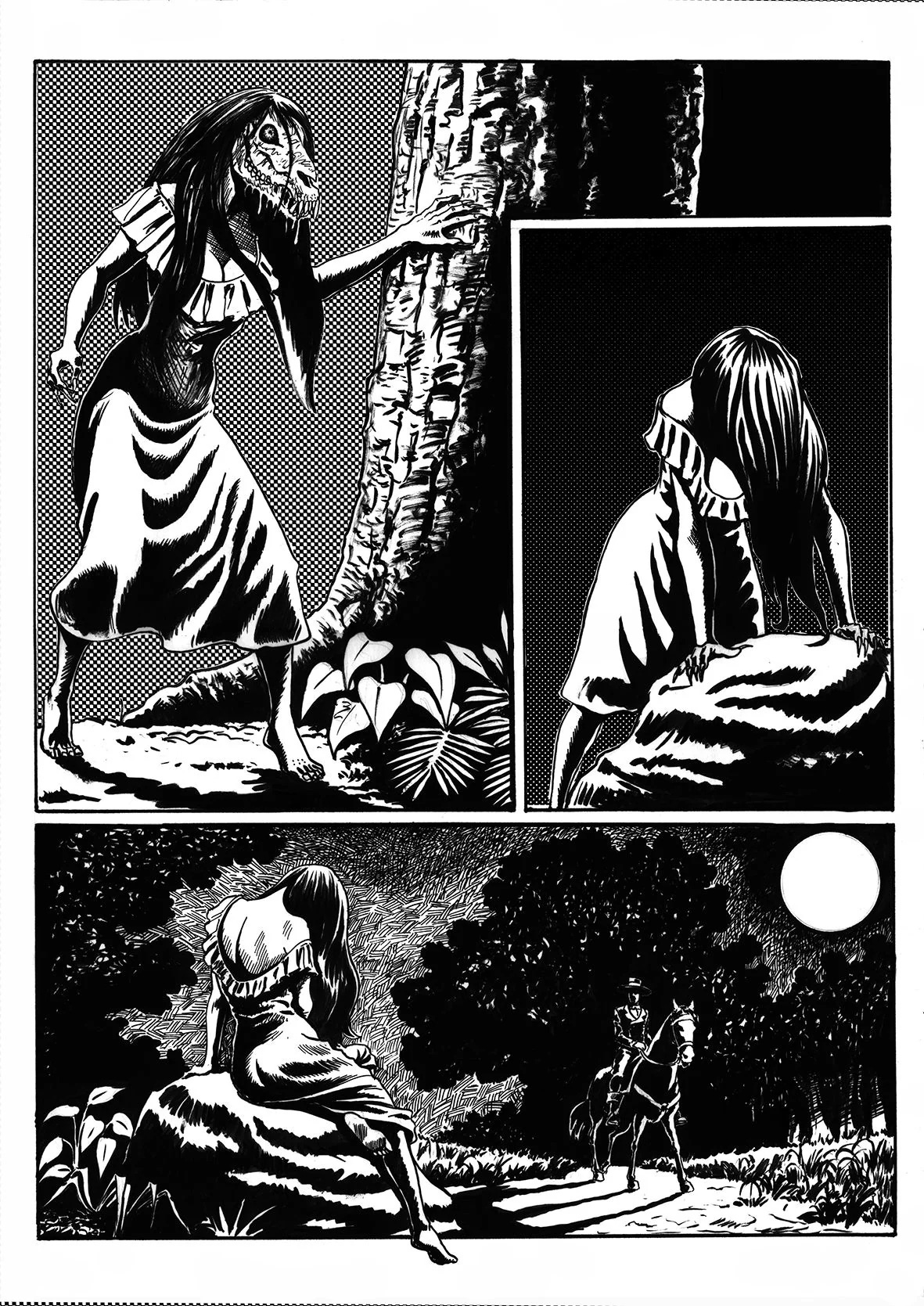
Drawing from my mother's Indigenous heritage and childhood folklore, I recast La Segua as Jane Baez, a flight attendant grappling with personal demons. This project explores intersections of racism, classism, and gender discrimination through poetry that blends historical accuracy with Latin American folklore. In this embodiment, Jane must confront the ghosts of the past and societal pressures threatening to consume her and those she loves.
The situations in these poems range from serious to humorous, playful, and supernatural, with Jane experiencing both public and private moments. In one scene set in 1967, as Jane emerges from the 72nd Street subway station, she becomes distracted by Roman Polanski's film crew shooting Rosemary's Baby at the Dakota Hotel and gets mugged. My research for these poems has introduced me to historical, informative, and horrific events from public records, media, and archives.
Organized chronologically from the late 1950s through the present day, these poems bridge cultural history and personal identity for contemporary readers as we meet Jane throughout her life. Crafted in a fable-like style reminiscent of oral ballads, Jane serves as both an exploration of my cultural heritage and a commentary on broader social issues. Whether seen or unseen, disparities remain at the root of segregation and caste systems affecting Indigenous, Black, and Asian people. By reimagining this colonial myth, I remind readers of the ongoing impact of historical injustices.
Our stories, past and present, are fundamental to a thriving culture and its people. This is why books are banned and people are silenced—our stories endanger those in power. The wealthy pit us against each other to explain their behavior as maintaining order. When we exempt those who maintain order from persecution and, more importantly, prosecution, we have lost our grip on a mutually shared reality.
The poems echo Shirley Jackson's The Haunting of Hill House meets Isabel Allende's The House of the Spirits—a haunting exploration of the female experience that blends horror with social commentary. When a flight attendant begins having terrifying visions of a monstrous woman, she must confront her past that threatens to consume her, echoing the psychological complexity of Carmen Maria Machado's Her Body and Other Parties and Octavia Butler's Fledgling.
For now, you should consider trying to write a poem about something you learned as a child.
Support independent presses and visit Barrow Street Press.
My new book Brutal Companion is available now!